
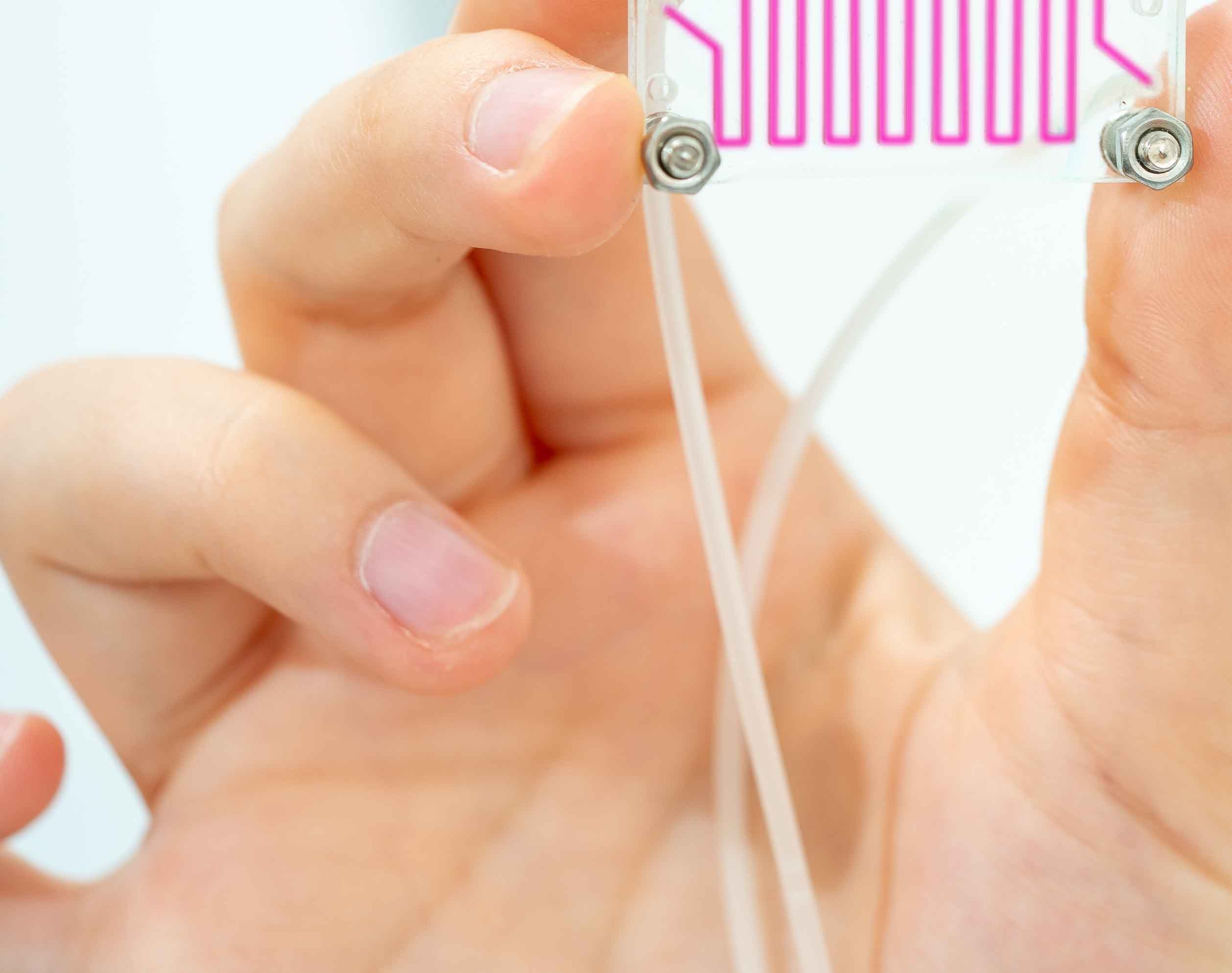
Designing a microfluidic device involves several steps, including conceptualization, design, prototyping, and testing. Here are some general guidelines to help you get started.
- Define your problem: Before designing a microfluidic device, it’s essential to understand the problem you’re trying to solve. Determine the sample type, the required throughput, the desired assay format, and any other critical parameters.
- Conceptualize your solution: This includes consideration of liquid propelling, read-out method, selection of materials and microfabrication method. Keep in mind that these platforms are interdependent and usually the selection of one will determine the other. They should be therefore carefully considered also in view of the final use of the device and its potential scale-up.
- Read-out method: Think about how are you going to monitor the processes in your microfluidic device. Naked eye, microscope, ultrafast camera, fluorescence, chemiluminescence, electro-chemical, etc. Do you need to follow the real-time situation or only the end-point is sufficient?
- Based on your application, choose a suitable material for your microfluidic device: The most common platforms include glass, silicon, and polymers such as PDMS. Each platform has its advantages and disadvantages, and you should select the one that best fits your requirements.
- Choose a liquid manipulation platform: In terms of liquid transport on the microfluidic device we can choose a passive or an active pumping system. Passive systems, such as capillary pump, paper microfluidics, SIMPLE pump, etc., are usually selected for autonomous and cost-efficient single use devices. On the other hand, active pumping, such as syringe pumps, pressure system, lab-on-a-disc or digital microfluidics, which require more complex electronics and control are more often used with reusable microfluidic devices.
- Design your device: Use CAD software to design your microfluidic device. Ensure that your design includes all the necessary channels, reservoirs, and other components required to accomplish your desired tasks.
- Fabricate your device: Once you have your design, fabricate your device using the chosen platform. Depending on your chosen platform, fabrication can involve techniques such as photolithography, soft lithography, micromachining or others.
- Test your device: Test your device using suitable fluids and samples to verify that it meets your design specifications. Depending on your application, you may need to optimize your device further.
- Iterate: Based on your testing results, iterate your design to improve the device’s performance. You may need to repeat the prototyping and testing steps until you achieve the desired results.
- Scale-up: If your device performs well in testing, consider scaling up your device to mass-produce it for commercial use.
Remember that microfluidic device design is a complex process that requires expertise in multiple fields, including microfabrication, fluid dynamics, chemistry and biology. Consider collaborating with experts in these fields to design and fabricate a functional device.
Back to news